
Here’s a question I receive nearly every day:
“My natural waist is 30 inches, and I just started waist training. How long will it take to see real results, and obtain a natural 24 inch waist?”
Of course, the exact wording, the numbers, and the goals all vary slightly from person to person. But I will tell you what I tell all of them – and you will not be happy:
I DON’T KNOW. And unfortunately, neither can anyone else. If someone claims that they CAN give you a specific duration of time that you will achieve your waist training goal, they are flat out lying.
If you look at these Before / After Waist Training examples, you will see that people have achieved all kinds of results, in all different durations. Some saw a marked difference in three months, while others achieved less dramatic results over two years. It’s different for everyone.
WHY is this?
The (semi)permanent results of waist training is dependent on a number of factors, including your body’s current state and your genetic pre-disposition, the quality of your corset and its compatibility with your body, and the way you train in your corset. Let’s break those down in further detail:
Factor #1: Your body type and current body stats
Your Body Fat
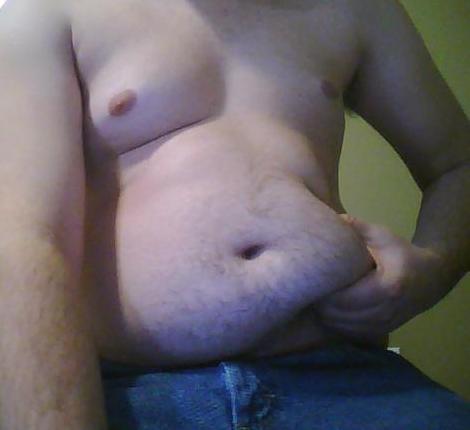
- Adipose tissue can immediately compress down a lot more than muscle in a corset, but it also bounces back when you remove the corset. Some with a high body fat % are able to cinch down 10 inches in the waist, while someone with very low body fat may only be able to cinch down 2-3 inches.
- Weight distribution also plays a role. Do you tend to carry more weight in your belly, or do you carry more weight on your hips and thighs? If you do carry weight in your belly, do you have a lot of visceral fat or subcutaneous fat? Subcutaneous fat sits under the skin but above the muscle, and makes your skin soft and malleable. Visceral fat is the more ‘dangerous’ fat that sits under your abdominal muscle, between your organs. Someone with more subcutaneous fat (even over their tummy) will probably have an easier time lacing down than someone with visceral body fat.
Your Muscle Tone
- Very toned, dense muscles may be more difficult to cinch down compared to less toned muscles, BUT if you time your workouts well, you can actually use your resistance exercise regimen to your advantage in waist training to change the morphology of your oblique muscles and have them almost “grow” into the hourglass shape encouraged by the corset. Also, once you get to higher reductions, you have to “stretch” those side muscles, and also the tendons and ligaments. Some people’s bodies seem to more readily accommodate to this than other people’s bodies.
Your Skeletal Frame
- Do you have wider ribcage or smaller ribcage? Are your ribs flexible and are you able to accommodate corsets with a conical ribcage easily, or is your ribcage very inflexible and difficult to move? Those who are easily able to train their ribs are likely to see faster waist training results than those whose ribs are very rigid. My article on the corset’s effect on the skeleton goes into more detail about this.
Your Age
- More mature waist trainers have bones that are not only less dense, but less malleable compared to younger trainers. For more information on how age can affect your corseting, see my article on waist training and age restrictions.
Your Organs
- When you look at human anatomy in a textbook, you’re seeing a general “average” of the size and orientation of organs. But not everyone’s organs look like that! Some people have larger organs, some have smaller organs. Even the position and orientation of organs can very slightly differ between individuals, and that small variation might make a huge difference in how well your body can accommodate the restriction of a corset. For further information, see my article on corsets and organs.
Your Water Retention
- What’s your water content like? If you are often bloated or have water retention, either due to your lifestyle or because of a medical condition, you not only won’t be able to lace down as much or as readily, but you have more of that “temporary squish” to you as opposed to contributing to that “long term training”.
Whether You’ve Been Pregnant Before
- Have you had a baby before or not? While this point is a bit more anecdotal, it seems that mothers are (on average) able to lace down more readily/ more comfortably/ to higher reductions compared to nulliparous women. Maybe this has to do with the fact that the baby had moved around a woman’s organs (especially in the final trimester), or the relaxin in your system during pregnancy had stretched out some tendons and ligaments already, or the woman was already accustomed to the feeling of restriction or breathing higher up in the chest, so she may be psychologically more comfortable with the feeling of being corseted. Read more about corsets after childbirth.
Factor #2: Your Corset

Proper Fit
- Is your corset comfortable? Does your corset fit you properly: when you lace down, does it reduce only the waist, and is it lying flat and gently supporting your upper ribcage and your hip area? Is your corset gap straight or uneven? Or is the corset overall not curvy enough: and is it giving you muffin top, pinching your hips or causing any lower tummy pooch to spill out underneath? A well-fitting corset is not only more effective at shaping, but it’s also much more comfortable, so you’ll be encouraged to wear it longer and more often.
Strength
- Is the corset strong? Does it hold up to the tension without buckling? Are the seams securely stitched? Are the bones creating a proper scaffold and not digging into your body? Are the grommets holding in? Having to put your training on hold – not because you want to, but because your corset breaks every 2 months and you have to replace it – is not cost effective and it’s not time-effective. If you’re in this for the long haul, invest in something strong and custom. See my article on Waist Training vs Tight Lacing, which also covers different requirements of a suitable corset for each.
Silhouette
- Is the corset the right silhouette to do the right job? If you want to train your ribcage, you might need a conical ribcage corset, which gradually tapers down and increases the pressure on the lower ribcage. A corset with a mild silhouette or with a corset with a rounded ribcage will give you a different effect. Be sure that the corset you are using is designed to do for you what you want. You can’t force a round peg through a square hole and expect a triangle to come out.
Factor #3: Your Lifestyle Habits and Training Methods

Supplementary Exercise
- Are you exercising alongside your waist training? Adding or increasing core resistance training can help you see results faster by encouraging your muscles to “heal” in a certain way. Even if you have no intention of losing weight (you only use a corset to see a change in your silhouette), exercise is still important! If you don’t add some core resistance training, your torso may see some shaping from the corset, but it may be squishy and complacent, and not hold that hourglass shape as well as if you were combining it with resistance training.
Eating
- Are you eating clean? Are you getting enough fiber so that you stay regular when corseting? Are you avoiding foods that you know can cause bloating or discomfort in your corset? Are you having regular small balanced meals, or are you the type to fast and then feast? Corseting over a large meal can be uncomfortable and difficult, and the quality of that meal also counts. You don’t necessarily need a specific diet for waist training, but eating sensibly goes a long way.
Drinking
- Are you staying hydrated? Are you getting a lot of clean water or tea? Are you keeping your electrolytes balanced (this ties in with water retention). Are you watching your blood pressure (which relates to your blood volume)? Do you take in a lot of caffeine or other diuretics, and are you making sure that your water intake balances that out?
Duration of your corset wear (and reduction)
- To get the best results in a corset, you have to use it. What method of waist training are you using? There is Romantasy’s “Roller Coaster” method, and there is the Contour Corsets “Cycle” Method (see the differences between the two waist training methods). Some people use a combination of both, or they may try a different method altogether. Some people consider waist training as wearing their corset only 8 hours a day while they’re out working. Others waist train by only wearing a corset to bed at night. Some people wear their corsets 12 or 16 hours a day, and a few very dedicated ones wear their corset 23 hours a day.
- The body responds best to consistency – for reasons I’ll explain in an upcoming article, you’ll probably see more results (and more comfortably!) if you wear a corset at a light or moderate reduction for long hours, as opposed to tightlacing or overlacing your corset for an hour and then not wearing it again for a few days.
Let’s use an infomercial exercise program as a metaphor for waist training expectations. Many exercise programs say that you CAN lose UP TO 20 lbs per month (as an example), but read the small print and you find that these results are not typical. Many of these programs are also backed up with a guarantee that with proper compliance to the program, you will see some kind of result (often within 60 or 90 days) or your money back.
But you will notice that they do not guarantee a certain number of inches lost, because people have different bodies, different fitness levels, different levels of compliance. It’s the same with a waist training program.
Ann Grogan (of Romantasy) offers the only corset training program I currently know of – in her some 25 years of working with waist trainers and 14 years officially coaching, she is able to confidently say that with her 3-month waist training program, you’re likely to see some noticable results in your natural waist with proper compliance to the program (the program covers a lot of factors: the type of corset you’re using, the reduction, the hours, the foods you eat, the exercises you do, etc). But since each program is personalized based on goals, each person’s compliance is different and each person’s body accommodates their corset differently, it’s still very difficult to precisely predict how many inches you’ll lose, or how fast.
What I have found is the highest indicator of success is whether you actually enjoy wearing your corset and find it completely comfortable. If you practice patience, and wear your corset consistently (and ironically, not be overly attached to your end goal), you are likely to see more results over time than someone who is less patient and is only corseting for the end result. But I will cover that in another article soon.
Do you currently waist train, or did you train in the past? How long did it take you to see results? Let me know in a comment below!
Hellos. I’ve always been interested in corseting. This page helped me figure out quite a bit but I still have a couple questions. First off, because of a bad car wreck when I was younger I only have 2/3 of my small intestine and 1/3 of my large intestine left. My abdominal muscles never fully recovered and I’ve noticed that I can cinch a wide belt down to 8″ smaller than my normal waist size. It is by no means uncomfortable. I know standard recommendations say to order a corset 4″ smaller than normal waist size but I feel quite confident I could go down more. What would you recommend? And thank you for such a lovely and informative site.
Hi Alice, I know two other people who have had parts of their intestines surgically removed and they can also cinch up a bit more than the average person, although they have mentioned that they don’t actually retain results after they take off the corset. Many corset companies recommend an initial reduction of 4-6 inches, or even up to 8 inches if your waist is above 35-40″ naturally since adipose is more easily squishable. But I wouldn’t personally choose a reduction more than 6-8 inches. Even though you have less competition for space in your body, you still need time for your muscles and tendons to stretch and your ribcage to comfortably take pressure. It might be best to go with a curvy OTR corset company that has a decent return policy (like Orchard at 30 days, or What Katie Did at 14 days) so if you try on your corset once and find that it’s way too big or loose on you, you can still return it for refund.
I’m curious where do the fat goes from your stomach? how long should we wear the corset for beginners?
Hi Sabrina, when you wear a corset, the fat doesn’t disappear but rather just becomes temporarily displaced. I have an article on waist training methods here, which may help you get started.
I recently started waist training (after seeing a picture and ordering randomly from online). The first time I tried one on it took me about half hour to fasten the whoke thing but it’s gotten easier to put on and wear. However it’s very uncomfortable when I sit or drive with it on. It digs into my body. Is there something you recommend to reduce the discomfort while sitting?
Hi K, corsets and vehicles are not the best of friends (especially if it’s a low car). My suggestion is to try and make your seating arrangement as “straight” as possible – if you have bucket seats, put a pillow or book on top to flatten out the bottom, and place a pillow behind your back so you can sit straight. I personally like to push my chair away from the steering wheel and then pull the back up almost vertical when driving in a corset, but others find a different arrangement more comfortable, so experiment and see what works best for you (preferably before you need to go on any long trip or busy highways). If all else fails, take your corset with you and put it on when you get to the destination. If you’re not able to operate a vehicle properly (including checking blind spots, etc) then put safety above fashion.
Hi I’m so excited to start waist training but I do have a question about the end result .. Once I have gotten the results that I want is this a life thing? Or will I always have to wear the corset to keep the figure ? Not talking about the fat on my body obviously that’s with healthy eating and exersize but what about the ribs? Will they get bigger again if I stop wearing my corset ?
Hi Aubrey, some level of maintenance is required, as with all things in life. When you want to keep up your strength, you maintain by lifting weights although perhaps not as rigorous as someone trying to bulk up. If you want to maintain your weight, you have to continue to eat well, although you may not diet as much as if you’re actively trying to lose weight. And with corsets it’s the same idea – maintaining a waist measurement is easier than reducing, but some effort has to be put into it over time. :) The ribcage can be pushed out again if you take up a sport like swimming, or if you are a professional singer/ brass musician, or if you get pregnant.
I talk about it more in this video: https://www.youtube.com/watch?v=FB39kT-ZvV4
I have scoliosis but its not bad , will my corset still work ?
Hi Mya, I know many people who have slight asymmetries (including but not limited to scoliosis) yet they can wear symmetrical corsets. Sometimes the corset may twist on their bodies. As long as the corset is comfortable on you, this is the most important thing. I find that I cannot wear certain types of corsets because my left hip protrudes more than my right, and so a corset may cause my left hip to go numb. But a well-made corset with ample hip room will not do this. One video you might find helpful is measuring each side of your body to see how much asymmetry you have.
Hi there, I just have a few questions. What do you recommend we look for when buying a corset? How do we know it’ll feel comfortable? And, where do you suggest we buy our corset?
Hi Gen, for best results (if possible) find a corset locally so you can see and feel what a real one should be like in person. I have tutorials for how to buy a corset in a store or online. An OTR corset will have better chances of having a return policy if you try it on and find that it’s not comfortable or compatible with your figure.
I also have a three-part series on corset fitting, which starts here.
I have a few questions.
1.) How many hours a day should you wear it in order to see results?
2.) How many inches on average does it shrink your waist?
3.) Do you have any techniques so that I am able to put the waist trainer on myself? For some reason it is soooo difficult for me.
Hello, I know of some waist trainers who build up to 8 hours a day at a certain reduction, and some who wear their corset all day but they cycle the reduction. I talk about waist training techniques here: https://lucycorsetry.com/2014/05/30/how-to-waist-train-comparing-corset-training-methods/
The number of inches you can lose from waist training depends on the individual, but I talk about it a bit in this video.
I also have a tutorial here for how to tie your corset by yourself. In fact, I have a whole playlist for this, depending on what kind of lacing technique you like!
Hi, I just started waist training. I have a 29 waist. I’ve been wearing it during my workout but think I’m not wearing enough. I want to stop wearing it during workouts and wear it to bed. I have read many blogs but no one talks about wearing it to bed. I wonder if it bothers anyone during sleep?
Hi Chantel, I have an article about sleeping in your corset here. There are ways to make yourself more comfortable while sleeping, like using pillows and wedges, and loosening the corset a bit before you lie down.
I’m having issues, it’s not a comfort thing, it’s when I lace in, I feel great, there’s nothing spilling below or anything, and then I turn around, and it looks like all the skin from under my corset is pushed up, and it hangs over slightly the top of my corset, and when I’m wearing an underbust, there’s a slight bulge between my bust and the top of the corset, is there any way to prevent this?
Hi Harlyn, it sounds like your corset is not large enough around the ribcage and the excess flesh is spilling over the top. Remember that the flesh must be at least temporarily displaced somewhere, and doesn’t just disappear under a corset – so muffin top is very common if the closed measurement of the top edge of the corset is smaller than your natural underbust circumference. If you can’t invest in a custom corset, you may consider a longline bra that comes down over your corset (or underneath, if it’s more comfortable) which may help to smooth over the bumps.
When I was reading “Gone With The Wind”, I thought Scarlett’s waist size (18.5″ everyday, 17″ occasional) absolutely impossible. I was about 23.5″ naturally and it seemed the physical limit, I had just never seen real corsets. Well I was able to reach these figures in 6 months! My natural waist also reduced by a couple of inches. It was not easy (I have a relatively wide ribcage), but what an exciting experience. Interestingly, I did not plan to waist-train at all – I just saw Lucy’s cnannel and thought “Beautiful! Why not get a nice real corset to wear to rock shows?” But when the corset arrived, I just could not take it off :)) Thank you Lucy for introducing the world of corsetry to us!
I’m always glad to hear about your positive corseting experiences, Alissa! Thank you for your kind words. :)